
The goalkeeper baselayers
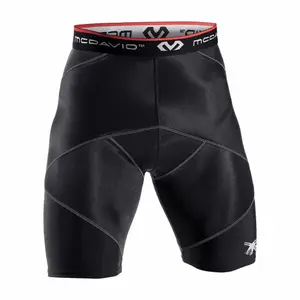


The baselayers page for goalkeepers brings together the technical underwear worn underneath the kit: padded leggings, compression shorts, and base layers. Designed for repeated dives and long minutes without the ball, they protect the skin from friction on synthetic surfaces and support the thigh muscles, from adidas or McDavid.
The invisible layer that protects during dives and supports the muscles.
The goalkeeper legging adidas Tiro Pro
The goalkeeper legging covers the entire leg under the shorts, which makes a big difference on a synthetic pitch: with each dive, the thigh and knee slide on the artificial grass and its pellets, often resulting in burns when the skin is bare. The adidas Tiro Pro adds padded areas where the goalkeeper lands, made from stretch fabric that moves with the jumps and landings. Worn close to the body, it keeps the pads securely in place, while a loose garment would let them shift. In cold weather, it also retains heat in the muscles between interventions.
Compression shorts McDavid: support for the adductors
The adductors, located on the inside of the thigh, are heavily used by the goalkeeper: lateral movements, pushes to dive, and landings in a split. The McDavid Cross Compression shorts are designed for this area, with targeted compression that supports the muscles and limits vibrations on impact. The American brand was founded in 1969 with a protective knee brace created by a doctor, Robert McDavid, for American football players, and has maintained this approach rooted in sports medicine. The shorts can be worn alone under the match shorts, or under a legging, and should never replace warming up.
Size and care
A baselayer should fit snugly, without compressing to the point of hindering circulation. It can be washed at 30 degrees, without fabric softener or dryer, which damage the elastic fibers. The goalkeeper's kit is completed with gloves, jerseys, shorts, pants, protectors, complete outfits, all gathered on the goalkeepers page.
Synthetic, grass or indoor: what coverage
The choice mainly depends on the surface. On synthetic surfaces, the whole leg needs to be covered, as the repeated friction will always burn the skin. On soft natural grass, padded shorts at the hips are often enough, except on frozen or very dry pitches. In futsal or indoors, the hard floor makes hip and knee protectors essential, as each fall happens on a surface without cushioning. Finally, the weather matters: a long baselayer and a long-sleeved under-shirt keep the goalkeeper warm when the game is happening at the other end of the pitch.
New arrivals and good deals
The new arrivals showcase the latest models, the discounts feature previous collections at reduced prices, and items shipped in 24h are prepared and dispatched within 24 hours. The good deals, the clearance, the sales and the Black Friday have their own football page.
Frequently asked questions
Compression or thermal: what's the difference for a baselayer?
A compression baselayer tightens the muscles to support them and limit vibrations upon impact. A thermal model, often brushed inside, is mainly aimed at retaining warmth. Some combine both, which are useful in winter for a goalkeeper who is often stationary.
Should a young goalkeeper wear padded leggings?
Yes, especially on synthetic: young goalkeepers often dive without proper falling techniques and quickly burn their thighs. A legging or padded shorts in junior sizes protect them and encourage them to dive without fear.
Is the colour of a goalkeeper's under-shorts regulated?
According to the laws of the game, under-shorts and tights must match the main colour of the shorts or their lower part. For the goalkeeper, it's the colour of their own shorts that serves as the reference: a black legging under a black short poses no problem.
How long do the padding in a goalkeeper's legging last?
They remain effective for a long time if heat is avoided: dryers and radiators compress the foams and detach the reinforcements. When the fabric wears out to the point of showing the foam, the protection against burns decreases, and it's time to replace it.
Does a long-sleeved under-shirt protect the elbows?
It mainly prevents friction and small burns on synthetic surfaces, and keeps the arms warm. To absorb shocks on the elbows, a model with padded elbow protectors, or a goalkeeper jersey that includes them, is needed.






