
All football equipment
This section covers everything about Football: shoes for every type of pitch, team kits and prints, goalkeeper equipment, tracksuits, teamwear for clubs, and training gear. Whether you're playing on a Sunday or outfitting a whole team, everything is sorted by use.
The right equipment primarily depends on where you're playing and the position you hold. Here's how to navigate and make the right choices.
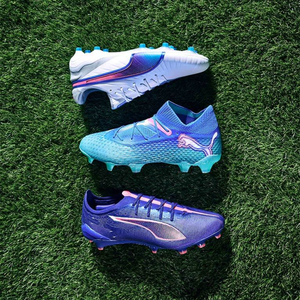

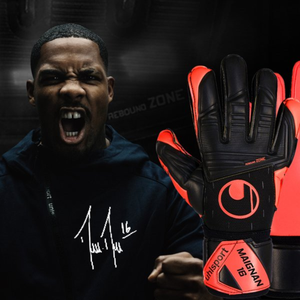
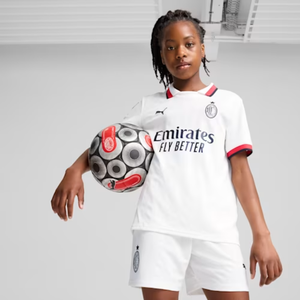
A section organised by use
Football is played on very different surfaces, in positions that have different needs, and at ages where the equipment changes radically. That’s why this section is divided by use rather than by brand: shoes on one side, shirts and printing on the other, then the goalkeeper position, club equipment, and gear for young players.
This organisation allows for a straightforward approach. A player looking for a pair of boots doesn't need to sift through bibs, and a coach equipping their team can find the kits, balls, and bags all in one place. Brands like adidas, Hummel, Joma, Uhlsport, or Errea are included in the selection available, each with its strengths according to the categories.
Choosing shoes according to the pitch
This is the most important choice and the source of the most common mistakes. The soles are labelled with a code that indicates the type of pitch they were designed for, and using the wrong sole wears out the shoe prematurely while exposing the player to slips and injuries.
The FG sole, for firm ground, features moulded studs and is suited for dry, well-maintained natural grass: it’s the most common. The SG sole, for soft ground, usually has six to eight screw-in studs, spaced out to grip in the mud of waterlogged pitches during winter. The AG sole is designed for synthetic pitches, with about twenty short conical studs that distribute pressure and prevent the foot from getting stuck in the surface.
For hard surfaces, we move to the TF sole, made of rubber covered with small knobs, ideal for stabilised pitches, city stadiums, and five-a-side football. Finally, the IN sole, completely flat, is reserved for gyms and futsal. All these pairs can be found in the football shoes category.
The shirt of your team and its printing
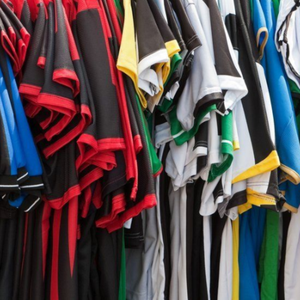
Wearing the colours of your team remains one of the great pleasures of being a supporter. The teams category gathers the shirts of clubs and national teams, available in both adult and child sizes. Most come in a supporter fit, which is looser and more comfortable for everyday wear, and sometimes in a player fit, which is much tighter.
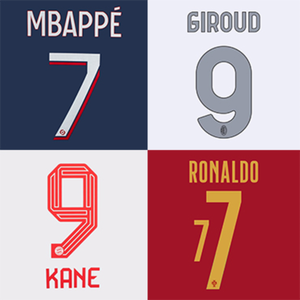
A shirt takes on its full value once personalised with a name and a number. The printing can be ordered at the same time as the shirt, with the official typography of the competitions. One point worth noting: a heat-pressed print does poorly in heat, and a printed shirt should always be washed inside out, at low temperature and without being tumble dried, or you risk having the letters peel off after just a few washes.
The goalkeeper, a special position
The goalkeeper has needs that no other player shares, and the goalkeepers category is fully dedicated to them. The central piece remains the glove, whose latex foam palm determines the quality of ball grip. A soft foam grips remarkably well but wears out quickly, while a harder foam lasts longer at the cost of less grip: many goalkeepers thus keep one pair for matches and another for training.
The cut of the glove also matters. A so-called negative cut, with seams on the inside, fits the hand closely and offers excellent ball feel, while a flat or rolled cut provides more surface contact. Goalkeeper kits, with extra padding at the elbows and hips, complete the equipment for diving on hard ground.
Equipping a club
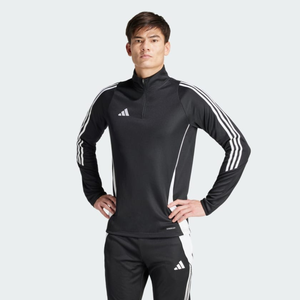
Coaches and managers find in the teamwear everything needed to dress a team in matching colours: shirts, shorts, socks, and training outfits, available in all sizes from child to adult. The benefit of these ranges is the ability to complement a set over the seasons without changing models, ensuring a cohesive team even when the roster changes.
Training equipment can be found in the equipment section: balls, bibs, cones, sports bags, and ball bags. The tracksuits complete the outfit for warm-ups, travel, and match days when staying warm in the stands or on the bench is essential.
Young players
Equipping a child requires special attention, and the juniors category groups all products in their size. Rapid growth is the main constraint: a pair of shoes that fit in September may be too small by spring. It's best to measure the foot at the end of the day, when it is widest, and leave about half a centimetre of space in front of the toes, without choosing a full size up, which could cause the foot to slip.
The ball must also be suitable for the age: a ball that is too big or too heavy prevents the child from properly working on striking and control, making learning unnecessarily frustrating.
New arrivals, offers and fast shipping
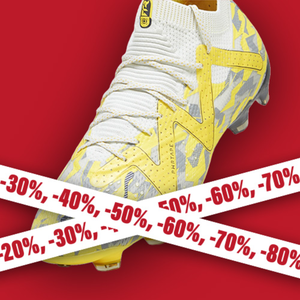
Several sections allow you to quickly find what you’re interested in. The new arrivals showcase the latest items added to the catalogue, particularly new shirts and shoes as soon as they are released. The promotions gather items offered at reduced prices, and the selection shipped within 24h includes products available immediately, which is handy before a match or a tournament.
Throughout the year, the major highlights follow a steady order: the Black Friday at the end of autumn, the end of year festivities, then the winter sales and the French Days in spring. The good deals remain available all year round.
Frequently asked questions
What studs for a synthetic pitch?
On synthetic, favour an AG sole, with short and numerous studs, which distributes pressure and limits knee locking. An FG sole, designed for dry grass, may be suitable for new synthetic but wears out faster.
What’s the difference between moulded and screw-in studs?
Moulded studs, fixed to the sole, are suitable for dry and synthetic pitches. Screw-in studs, made of metal or a mix, grip on damp and wet grass, but are often banned on synthetic.
How to print a football shirt?
The printing consists of the name and the player’s number, in the official typography of the competition, applied using heat transfer. Sleeve badges can be added for a kit identical to that worn in a match.
How to choose goalkeeper gloves?
The latex in the palm makes the difference: soft and grippy for matches, thicker and more durable for training and synthetic pitches. The cut, flat, negative, or rolled, changes the fit and contact surface.
What football shoes for a child?
For a child, choose a flexible, lightweight, and easy-to-slip-on shoe, allowing for half a centimetre to a centimetre of allowance. A Velcro model helps the younger ones, and the sole should match the pitch of their club.






