
Flamengo, the club from Rio de Janeiro

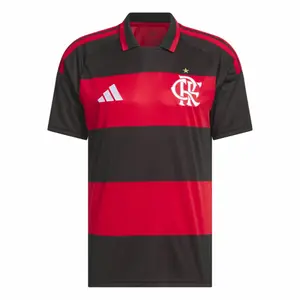
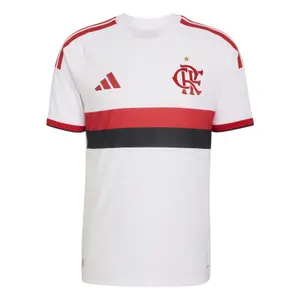

Our Flamengo page tells the story of the most popular club in Brazil: a rowing club from Rio de Janeiro founded in 1895, the golden age of Zico crowned in Tokyo in 1981, its victories in the Copa Libertadores, the Fla-Flu at Maracanã, and the red and black shirt adidas, of which the third version completes the selection.
The red and black of Mengão.
A regatta club turned football giant
The Clube de Regatas do Flamengo was founded in 1895 by rowers from the Flamengo neighbourhood by the Guanabara Bay. Football arrived only in 1911, when dissident players from Fluminense joined the club and created a section; this split has since fueled the rivalry of Fla-Flu. The Mengão claims the largest supporter base in Brazil, the Nação rubro-negra, and has made the vulture, the Urubu, its mascot, having proudly reclaimed a nickname used by its rivals.
Brazilian football
Brazilian clubs also include:
All the clubs are gathered on the Brazilian clubs page.
Zico, the night in Tokyo and continental finals
Trained at the club, Arthur Antunes Coimbra, known as Zico, became the club's top scorer in history and led a golden generation to the top. In November 1981, Flamengo won its first Copa Libertadores against the Chileans of Cobreloa, then on December 13, thrashed Liverpool three-nil in the Intercontinental Cup in Tokyo; Zico, named man of the match, dazzled with his passes. The club returned to continental glory in 2019, thanks to two late goals from Gabriel Barbosa against River Plate, and again in 2022 and 2025, in Lima, with a header from Danilo against Palmeiras.
The Maracanã, Fla-Flu and the rubro-negro shirt
Flamengo holds its big matches at the Maracanã, opened for the 1950 World Cup, which it shares with Fluminense. The Fla-Flu has attracted record crowds and remains one of the most followed derbies in the world. The home shirt, with broad red and black horizontal stripes, is among the most recognisable kits in South America; adidas has been dressing the club since 2013 and also offers a third shirt in more varied shades. One should take their usual size for the supporter version, which is looser than the player version.
Good deals
Good deals can also be found in good deals, promotions, clearance, sales, Black Friday. The new arrivals showcase the latest collections, and items shipped within 24 hours are prepared and dispatched in 24 hours. The year's highlights follow a stable order: Black Friday at the end of autumn, the end-of-year holidays, the winter sales, the French Days in spring, followed by the summer sales and the back-to-school season.
Frequently asked questions
In which country and city does Flamengo play?
Flamengo is a Brazilian club from Rio de Janeiro, born in the neighbourhood of the same name, in the south of the city. It competes in the Brazilian championship, the Brasileirão, and hosts its opponents at the Maracanã.
What does the nickname Mengão mean?
Mengão is the augmentative of Mengo, a term of endearment for Flamengo: it could be translated as the big Mengo. Supporters use it in their chants, along with rubro-negro, which refers to the club's red and black colours.
Has Flamengo ever faced PSG?
Yes, in the FIFA Intercontinental Cup final on December 17, 2025, in Doha. After a 1-1 draw, Paris Saint-Germain won on penalties against the South American champions.
Who are Flamengo's main rivals?
Fluminense, the opponent in the Fla-Flu, remains the historical rival, but Vasco da Gama, with the Clássico dos Milhões, and Botafogo also light up the derbies of Rio. These matches regularly fill the Maracanã.
Which famous players have been trained at Flamengo?
Besides Zico, the training centre has produced Vinícius Júnior, who moved to Real Madrid, Lucas Paquetá, striker Adriano and goalkeeper Júlio César. This setup makes Flamengo one of the major exporters of Brazilian talent.






