
Football team jerseys
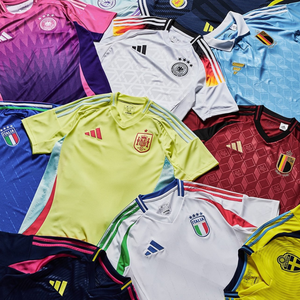
The Teams bring together the jerseys of clubs and national teams: PSG, OM and RC Lens, Real Madrid and FC Barcelona, Liverpool and Arsenal, Bayern Munich, as well as the nations of the 2026 World Cup.
Home, away or third jersey, supporter or authentic version, adult or child: each outfit has its own codes.
The stars above the crest
The stars sewn above the crest tell the story of achievements, but each country has its own rules. For national teams, one star represents a World Cup win: France has two for 1998 and 2018, Brazil has five, Germany and Italy have four, and Argentina has three. In Italy, clubs add a star for every ten titles of champion, a tradition that started in 1958. In Germany, the league has established its own scale for the Bundesliga: one star for three titles, two for five, three for ten, and four for twenty.
In France, the OM star is an exception: it celebrates the victory in the Champions League in 1993, the only one for a French club before PSG's win. England, on the other hand, does not have a star system for its league, and clubs display their achievements differently, with sleeve badges or inscriptions under the crest.
Home, away and third kits
The home kit features the club's historical colours and is worn in its stadium. The away kit is used when both teams' colours are too similar, allowing more freedom for designers. The third kit completes the set for cases when the first two clash with the opponent, and is often used in European cups. This last one is where manufacturers take the most graphic risks.
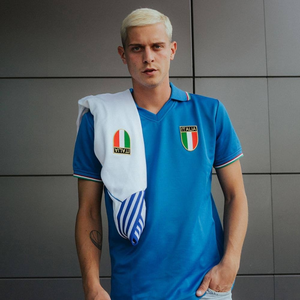
National team kits follow a different schedule, dictated by major tournaments: the kits for the 2026 World Cup, from Spain, Brazil or Algeria, support their team for about two years. Vintage kits, reissues of historical outfits, allow fans to wear a cult kit.
Supporter or authentic version
Each kit is available in two versions. The authentic version, like the PSG authentic home kit, is what the players wear: finer and more technical fabric, heat-sealed logos, and a very fitted cut. The supporter version has the same design in a thicker fabric, with logos often embroidered and a straighter cut, more comfortable for everyday wear and more durable to washes.
For an authentic version, it is often necessary to go one size up from usual. Kids' kits, like those from Real Madrid, Bayern Munich, Arsenal or PSG, use the supporter cut and are chosen based on the child's height rather than age. Printing allows you to add name, number, and official badges.
Washing and preserving a kit
A kit should be washed inside out, at a maximum of 30 degrees, without fabric softener, and air-dried. The tumble dryer and iron must be avoided on logos and heat-sealed prints, as the heat can peel them off. For a collector’s kit, a wide hanger helps to avoid distorting the shoulders, and storage away from light preserves the colours.
Kits by league
Kits are classified by league:
- French league, featuring PSG, OM, RC Lens, and other French clubs.
- Premier League, with Liverpool, Arsenal and other English clubs.
- La Liga, featuring Real Madrid and FC Barcelona.
- Serie A, with Italian clubs and their stars.
- Bundesliga, featuring Bayern Munich and other German clubs.
- National teams, with the kits from the 2026 World Cup.
- Other clubs, for teams from other leagues.
- Vintage, for reissues of historical kits.
The training kits from the same clubs complete the outfit, juniors dress young supporters, and shoes, the goalkeeper category, teamwear, and equipment complete the world on the football page.
New items and good deals
The new items showcase the latest models, the offers feature previous generations at discounted prices, and the items shipped in 24h are prepared and dispatched within 24 hours. The good deals, clearance sales, sales, and Black Friday all have their football page, with major events of the year running from Black Friday through the year-end holidays, the winter sales, and then the French Days in spring.
Frequently asked questions
What do the stars on the French national team kit mean?
Each star represents a World Cup win: France has two for 1998 and 2018. Brazil has five, Germany and Italy have four, and Argentina has three.
How long is a national team kit current?
National team kits follow the schedule of major tournaments and support their team for about two years, while club kits change every year. Vintage kits then reissue the historical outfits that have become cult classics.
Why do Italian clubs have multiple stars?
In Italy, a star is added for every ten titles of champion, a tradition that began in 1958. Germany has its own scale in the Bundesliga, with a star for three titles, while England does not have a star system for its league.
What is the purpose of a club's third kit?
It is used when both the home and away kits both conflict with the opponent's colours, and often in European cups. This is where manufacturers take the most graphic risks.
How do you wash a printed kit without damaging the print?
Wash inside out, at a maximum of 30 degrees, without fabric softener, and then air dry. The tumble dryer and iron will peel off logos and heat-sealed prints. For a collector’s kit, a wide hanger helps to avoid distorting the shoulders.






