
Fitness and training accessories






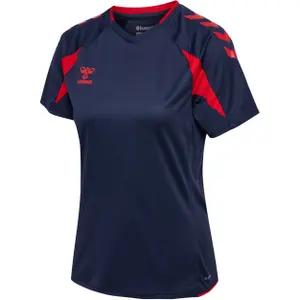
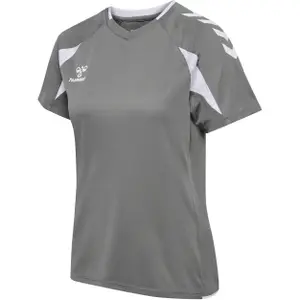
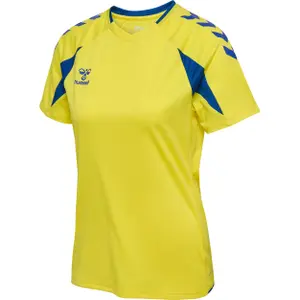
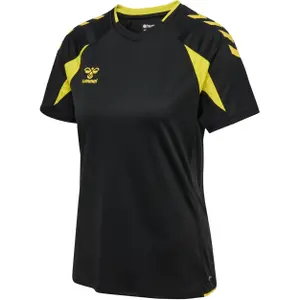
Our selection of fitness accessories brings together the small equipment that structures a training session: Tremblay cones and Kuebler Sport for marking agility workshops, markers, whistle, foldable trolley to transport everything and pump to keep the training balls at the right pressure. You will also find our pointers for putting together simple equipment at home.
The equipment that structures the session.
Cones and markers for marking workshops
The cone remains the most versatile accessory for a group fitness session. The forty-centimetre model from Tremblay, a French brand of equipment for clubs and schools since 1971, features twelve holes and a notch: you can slot in poles or bars to create low hurdles, gates, or obstacles to jump over at different heights. The cones from Kuebler Sport, a German family business founded in 1987 in Backnang, define the stations of a circuit, the distances in a split sprint, or the layout of an agility course both indoors and outdoors.
Other accessories
Fitness accessories also include:
All accessories are gathered on the accessories page.
Circuit training: organising space and time
A circuit training session consists of several workshops, each worked on for a fixed duration before moving on to the next. The marking equipment makes this organisation clear: one coloured cone per station, cups on the floor to mark the back-and-forth movements, and poles planted in the cones for slaloms and sideways steps. The whistle signals the starts and changes of workshop, more audible than a voice in a hall that echoes or outdoors. For a split format, the most common alternation involves thirty seconds of effort followed by thirty seconds of recovery, which is then adjusted to the group's level.
Transporting and maintaining equipment
A coach running several sessions each week saves time with a folding cart: it transports cones, poles, balls, and ropes from the storage room to the field, then folds up for flat storage. The pump keeps the training balls at the specified pressure near the valve, checked before each session to ensure all bounce the same way. After training, cones are stacked by colour, rinsed if muddy, and stored out of the sun, as ultraviolet rays gradually harden and crack the soft plastic.
Good deals
Good deals can also be found in the good deals, promotions, clearance, sales, and Black Friday. The new products showcase the latest collections, and items shipped in 24h are prepared and sent out within 24 hours. The highlights of the year follow a stable order: the Black Friday at the end of autumn, the end-of-year holidays, the winter sales, the French Days in spring, then the summer sales and back to school.
Frequently asked questions
What fitness accessories should I choose for training at home?
A floor mat, a few elastic bands of different resistances, and a jump rope cover the essentials of strength training and cardio. Add a pair of adjustable dumbbells or a kettlebell when bodyweight exercises become too easy.
What’s the difference between a cone and a training cup?
The cone, tall and visible from afar, serves as a marker and can hold a pole to create an obstacle. The cup, flat and flexible, lies on the floor without obstructing foot placements: you can walk over it without twisting your ankle, which is why it's used to mark lines.
How do I choose the resistance of an elastic band?
Bands are classified by colour, from the softest to the hardest. Start with a resistance that allows for twelve to fifteen clean repetitions, then move to the next level when the movement becomes too easy at the end of the set.
How many cones should I plan for a group class?
Count two to four cones per workshop depending on the exercises, which is about twenty for a circuit with six stations. Different colours simplify the instructions: each participant can spot their station and direction of rotation at a glance.
Do I need a thick floor mat for strength training?
A mat about one centimetre thick protects the knees and back during planks and abdominal exercises, while remaining stable for standing exercises. Thicker mats can become unstable during lunges; thinner ones are mainly suitable for stretching.






